From Food Scraps to Full Circles.
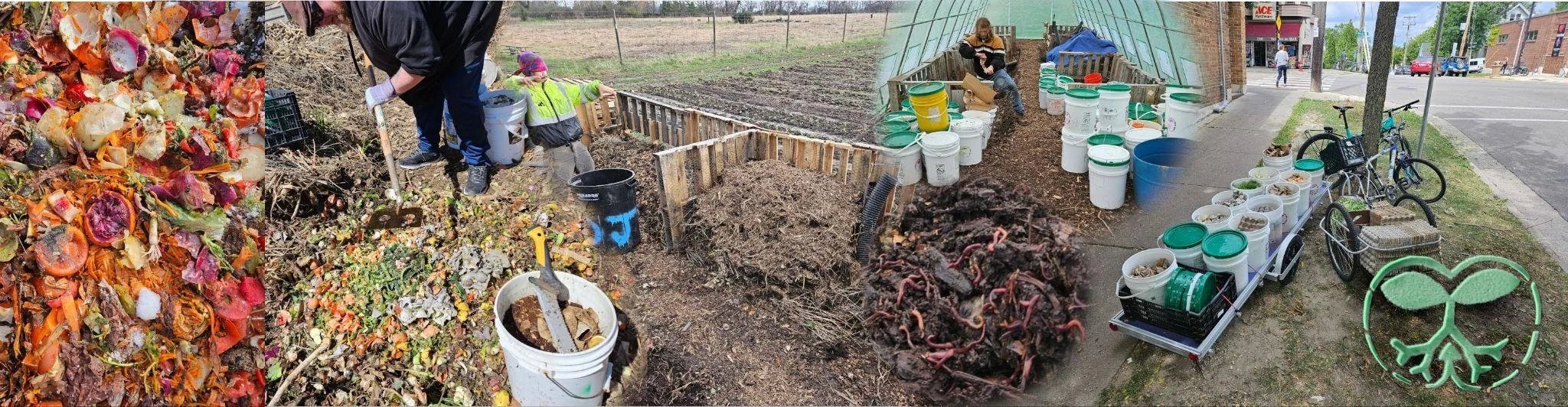
Brainplate’s projects begin with materials Madison already has: food scraps, people willing to help, soil that can be rebuilt, and land and water needing care.
The work moves through four connected areas—community composting, Bucket Farm Friends, practical learning, and water-and-habitat projects.
From scraps to living soil.
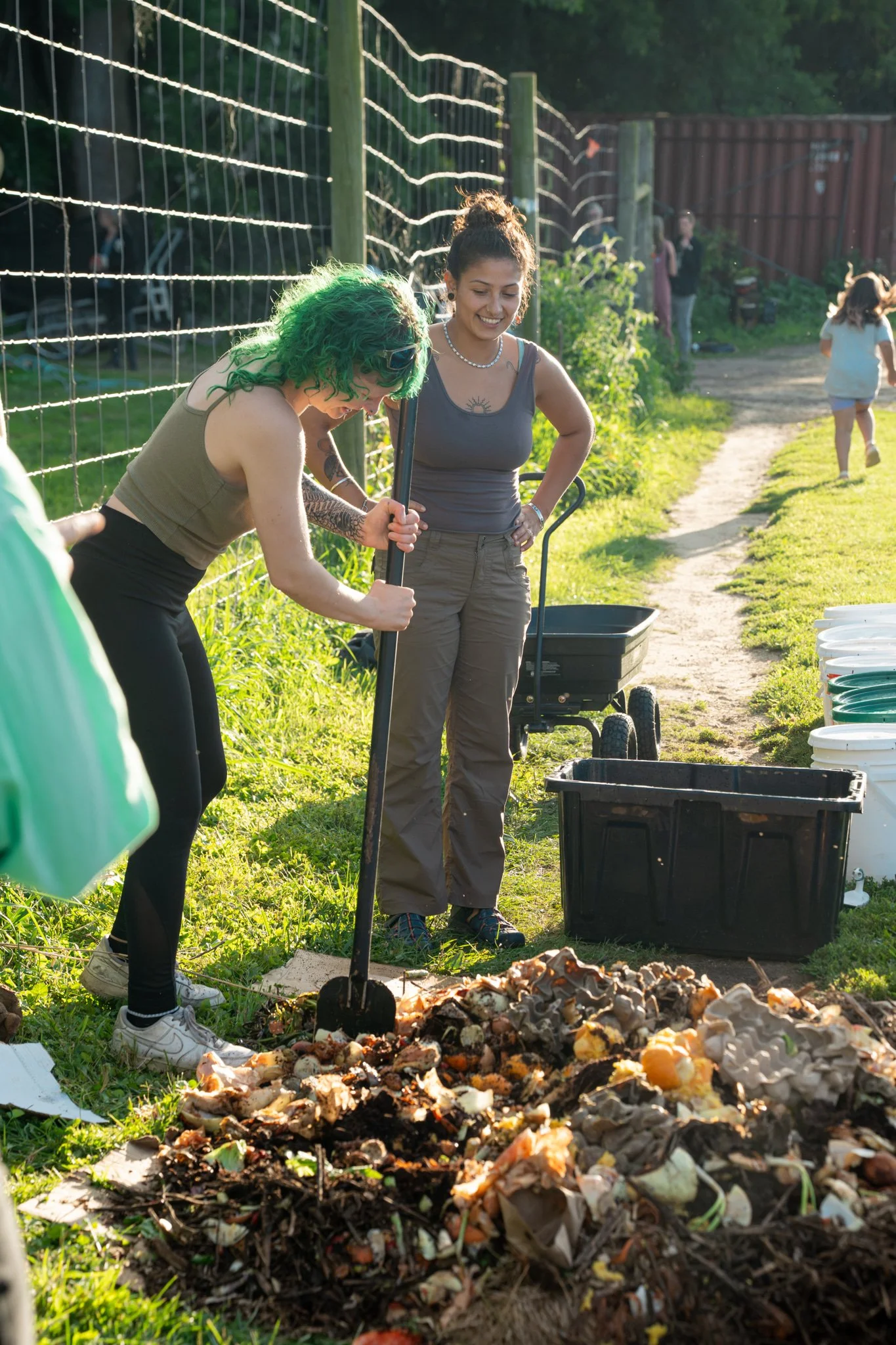
Brainplate Grows cofounder Elliott Gilfillan explains how local food scraps become living soil—and how neighbors can help grow a stronger composting network across Madison.
THE PROJECT MAP
Four ways the loop becomes useful.
1 · Community composting
Partner kitchens and neighbors separate food scraps. People- and bicycle-powered collection brings the material to Troy Farm, where volunteers help transform it into finished compost. Northside Community Compost extends that loop with a food-scrap drop-off at the Northside Farmers Market.
2 · Bucket Farm Friends
Finished compost, recycled buckets, four gallons of soil, and mature crop plants become compact urban farm kits. The 2026 pilot distributed 55 kits in six weeks.
3 · Practical learning
Hands-on workdays share useful composting and growing knowledge now. Brainplate is developing a broader education program over the winter, with more information expected ahead of summer 2027.
4 · Water + habitat
Clearwater Collective’s floating-island pilot at Tenney Park Lagoon extends the same circular thinking into open water, where its planted root zone is being studied for nutrient capture and habitat benefits.
Get InvolvedCHOOSE YOUR ENTRY POINT
Every project runs on people like you.
Save scraps. Partner your kitchen. Join a workday. Bring compost home. Share a skill. Support a pilot. You do not need to be an expert—you only need a place to begin.